Showing posts with label Oklahoma City copywriter. Show all posts

Sunday, July 21, 2024

The Tour de France and Maximizing Performance


 Welcome to the 2024 edition of What The Tour de France Can Teach You About Advertising. This is my annual post where I use professional bicycling's Tour de France to illustrate ways to improve your advertising. You can catch up on previous entries here.

The 2024 Tour de France was expected to be a battle between the two top cyclists in the world, Tadej Pogacar and Jonas Vingegaard. Vingegaard had won the last two Tours and Pogacar took the two prior to that. But as the season evolved, questions arose about each.

Pogacar raced in, and won, the Giro d'Italia in May. In the old days, cyclists would ride in all the "Grand Tours" (the Tour of France, Giro d'Italia and Vuelta a Espana). Today, however, the Tour de France is considered the Super Bowl of cycling. As such, many top cyclists orient their season and training around that race. And given that, some questioned whether Pogacar could recover fully to be in top shape in France.

The questions were even greater for Vingegaard after he suffered a broken collarbone, broken ribs and collapsed lung in a crash in April. For most cyclists, the broken bones would be enough to throw off their training. But the collapsed lung also kept Vingegaard in the hospital for 12 days. That was huge since it's generally believed a cyclist can lose up to 10% of his or her VO2 max (the body's ability to efficiently transport oxygen to the muscles) after two weeks off the bike. Vingegaard's hopes suffered another blow as the Tour approached when several of the top support riders on his team were lost to injury or illness. Ultimately, Vingegaard's participation in the Tour de France wasn't confirmed until about two weeks before the start.

Reaching Peak Performance

It was once accepted for pro cyclists to arrive at the Tour de France in not-quite-top shape and use the early stages of the race to "round into form." Since then, biometrics, data analysis, VO2 measurement, power meters and many other factors have entered the equation. Thus, riders can now train to be at "peak fitness" for specific races.

To reach peak fitness, pro cyclists and other endurance athletes focus on high-intensity training while monitoring the factors above. However, too much high-intensity training can negatively affect an athlete's fitness. And that's why professional cyclists structure their training to alternate between attaining peak fitness and more relaxed periods designed for rest and recovery.

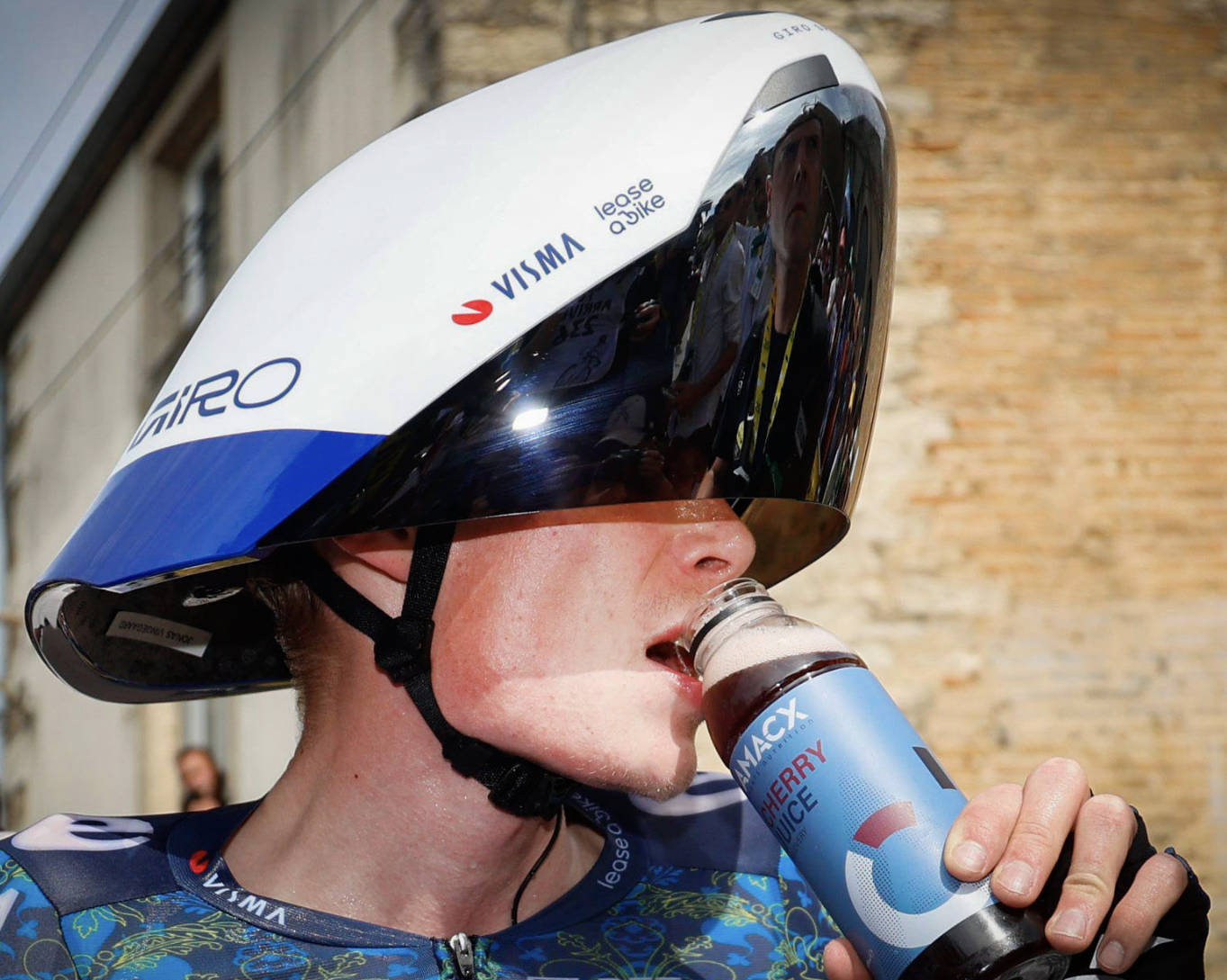
Tadej Pogacar showed he could recover from his win at the Giro and still be able to win in France. However, Vingegaard looked to be close, but not quite in top form for le Tour. Though he finished in second place and even won a mountain stage, Vingegaard lacked the top speed and fitness level that Pogacar displayed throughout the race. Not even his stupid-looking, incomparably large time trial helmet could help Vingegaard bridge the gap.

Maximizing Your Advertising Performance

So what does this have to do with your company's advertising? Remember that advertising is about impressions. That means, keeping your brand in front of your customers as often as possible. It means keeping your customers "conditioned" to your brand and message so that they know what you stand for and what you can deliver. To do that, focus on an ad program that broadcasts your message at regular intervals rather than one big splash. That way, when you do hit your peak period, you can amp up your advertising and take advantage of the "conditioning" you've already done.

Perhaps the most vivid example of the idea of conditioning your audience is the Super Bowl. For the big advertisers, the Super Bowl is simply an expensive, flashy way to burnish their brand with ads that may have nothing to do with their goods or services. That's because, by advertising throughout the year, their brand is already familiar to consumers. But, almost every year, there may be one or two Super Bowl advertisers that no one has heard of. Getting overlooked on Super Bowl Sunday is easy, but the unknowns trying to make a splash are often forgotten quickly.

So how can you maximize your advertising performance? Simply put together a 12-month advertising plan that maps out your ad strategy forthcoming year. Plan to spend more during your peak sales periods. But, to maximize your advertising performance, spread other advertising expenditures throughout different periods as well. By putting in the work during your slower periods, you can ensure your advertising during peak periods gets maximum results.

Pro cyclists put in hours of work to perform their best at the Tour. And with a little bit of effort, you can tune your ad plan for maximum performance for your business, as well. Simply keep your brand and messaging visible consistently so, that when you hit your peak periods, your advertising will have a strong impact. And that way, you'll get peak performance for your advertising dollar, too.

Monday, February 13, 2023

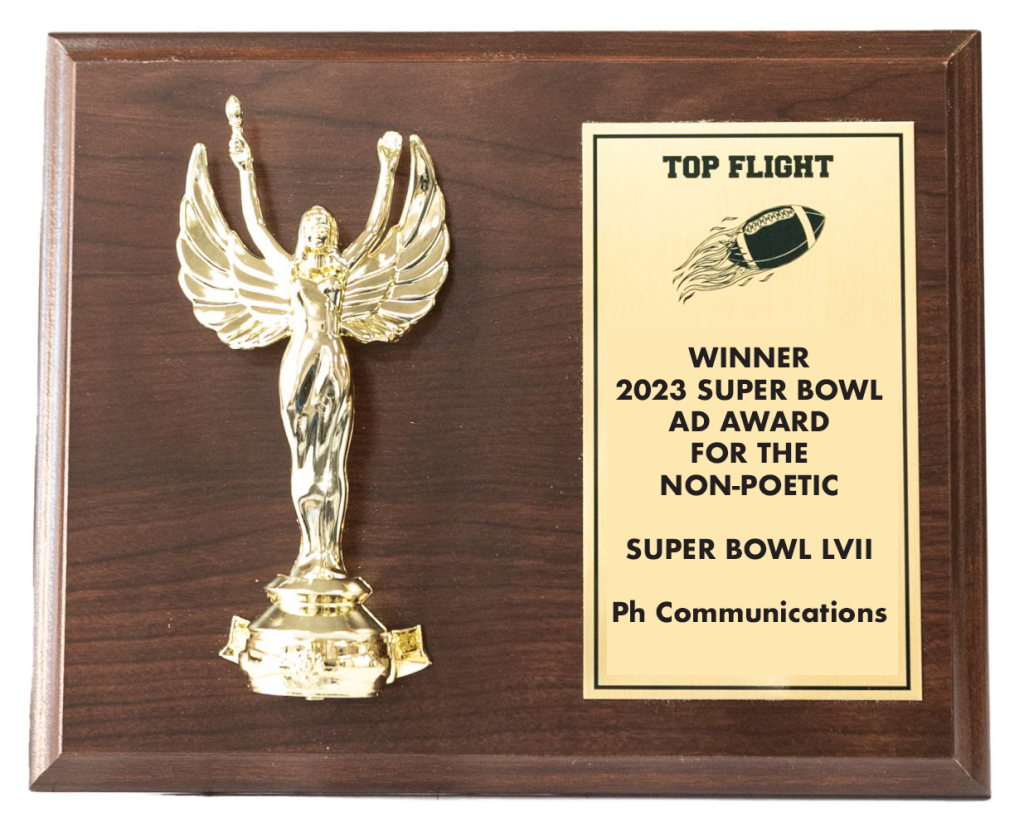
The 2023 Super Bowl Ad Awards For The Non-Poetic

 Super Bowl Ads
2023

Welcome to the 2023 Super Bowl Ad Awards For The Non-Poetic! Super Bowl LVII is history and the Chiefs are Super Bowl champions! And it’s time to reveal our judging panel’s (me and Office Dog) top honors for this year’s Super Bowl ads.

Everyone has their opinions of the best and worst, funniest and failures, award winners and money wasters, noteworthy and not worthy. But our Super Bowl Ad Awards may stray wildly from the standard accolades for Super Bowl ads. Our goal is to recognize the Super Bowl ads that stuck and the ones that sucked. Our goal is to recognize the ads that resonated with the person who watched the game first, the commercials second, and had a beer or two (from the viewpoint of an advertising guy who worked Super Bowl promotions in bars for 15 years). So, without further non-poetry…

The A For Execution But… Award

For a change, this year Dodge went light with a spot for their not-yet-available Ram REV electric truck. The ad parodied various ads for erectile dysfunction and did a nice job of it with the tagline of "Premature Electrification." Normally this is a sound Super Bowl ad strategy. But it got really old, real fast. And perhaps missing the irony, Dodge is using the term "premature" for a vehicle that isn't even available yet. This begs the question, was the ad written knowing the truck wouldn't be available? Or was it produced once they realized they'd be spending $6 to $7 million to advertise a product no one can buy yet? Either way, this ad and any impressions it made, will be long forgotten by the time the Dodge Ram REV is available for purchase. 


The Office Dog Honors Award

This award honors the best use of animals (preferably monkeys) in Super Bowl ads. However, monkeys seem to be passé in Super Bowl ads these days. Aside from CGI-generated dancing animals in the Jeep Electric Boogie ad, this year's Super Bowl ads had lots of dogs. The Farmer's Dog dog food ads scored major "awwww" points with their two sweet ads. But the absolute best ad with dogs was Amazon's "Saving Sawyer." In telling the story of the beloved family dog who expresses his separation anxiety in funny, destructive ways, Amazon engaged viewers, made them laugh, and still managed to stick the landing. Though it only minimally extolled the virtues of the company, it was still better than what Amazon has run recently. And it was also one of the better ads of the night. 


The WTF? Award

The second ad of the evening from game developer Limit Break was simply brutal. It featured oddly animated characters, a large QR code, and annoying music and sound effects screaming "Scan Me!" for a chance at a "free digital collectible." I'm pretty sure the NFT frenzy has already passed anyway (much like crypto), so I doubt too many people ran toward their TV with the smartphone in hand to scan that QR code. Either way, spending $6-$7 million for a Super Bowl ad, throwing together an awful, annoying ad that's nothing more than "Scan me!" was an incredible waste of money, even for a sketchy game developer.This ad may play in television market like Japan. But it was game over in the U.S. on Super Bowl Sunday.

Note, the Limit Break ad was so bad that it appears no one has bothered to put it on the Internet. Instead, to get a feel for that spot, please enjoy this "teaser" ad:


Honorable Mention: The Jesus, He Gets Us ads. It may be Sunday, but Super Bowl Sunday is not the day to schlep spirituality to the masses.

The Please Just Go Away Award

While all the ads featuring QR codes collectively earned a close second for this honor, M&Ms took the top prize. the brand's silly attempt to play on social outrage over spokesperson representation gave us Maya Rudolph selling her Ma&Ya's chocolate-covered clams instead. This was followed by a live in-game sponsorship announcement and a bring-it-full-circle spot after the game. It wasn't funny and the whole attempt to be edgy, controversial, and cute failed miserably.


Honorable Mention: Pringles' concept of people getting their hand stuck in Pringles cans was stupid (and kind of disgusting) when it was new. The same-but-different idea didn't work this year. It's time to try a new concept.

Best Superfluous Use Of A Celebrity Award

This was a tight race as there were far too many celebrities packed into too many ads. Adam Driver starred in a pointless and quickly forgotten ad for SquareSpace. T-Mobile gave us Bradley Cooper and his Mom. But Draft Kings simply crammed too many celebrities into a :30 second ad that the message and most of the celebrities got overlooked. You can make a spot work with lots of celebrities, but it helps if you also have a story to tell and the celebrities are all instantly recognizable. Otherwise, you have no form or substance, which perfectly encapsulates the Draft kings ad…


Best Unfunny Ad Based On A Movie That Actually Was Funny Award

For the first time in more than 30 years, Anheuser Busch gave up being the exclusive Super Bowl beer advertiser. While here wasn't an ad for the legacy brand Budweiser, there was a fun (but cliché) spot for Busch Light. There was also an immediately forgettable ad for Bud Light (pro tip: you can't use sex to sell swill). Unfortunately, there was also a bloated, staggeringly unfunny ad for Michelob Ultra. Michelob Ultra seems popular among golfers, so an ad that evoked the movie Caddyshack should have been a no-brainer. Instead, Michelob Ultra simply reenacted scenes from the film with celebrities (Serena Williams, Tony Romo, Alex Morgan, the old guy from Succession) reading the lines. However, other than a cameo from Caddyshack co-star Michael O'Keefe, there was nothing funny or even engaging about the spot. AB may have saved some money by giving up exclusivity, but they should have spent more of that money on creativity.


The Super Bowl Ad Awards For The Non-Poetic Water Cooler Winner

In spite of all the dreck, there were some good spots in this year's Super Bowl ads. I thought Doritos' Try Another Angle spot worked well. Amazon's Saving Sawyer (the Office Dog Award winner above) will still have people talking on Monday too. But for my money, the best Super Bowl ad this year was the first ad of the game. That was the Dunkin' Donuts ad featuring Ben Affleck. Granted, David Letterman originated the concept of a celebrity in the drive-thru 30 years ago. But the Dunkin' ad featured Affleck leaning into all his meme clichés, his Boston accent, humor, and a great kicker at the end from Jennifer Lopez. It may have run in the first quarter, but it was a smart enough ad that plenty of people will still be laughing about it tomorrow and in the weeks and months to come. 


So, there ya’ go… my Super Bowl Ad Awards for 2023. Some good, some bad, some creative, some cliché. Feel free to leave your thoughts, picks, pans, favorites, and failures in the comments. And, until then, when does the 2023 football season start?

Monday, February 14, 2022

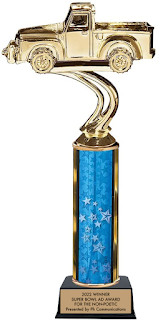
The 2022 Super Bowl Ad Awards For The Non-Poetic


Welcome to the 2022 Super Bowl Ad Awards For The Non-Poetic! Super Bowl LVI is history and the Rams are Super Bowl champions! And it's time to reveal our judging panel's (me and Office Dog) top honors for this year's Super Bowl ads.

Note that, while everyone has their opinions of the best and worst, funniest and failures, award winners and money wasters, noteworthy and not worthy, our Super Bowl Ad Awards may stray wildly from the standard accolades for Super Bowl ads. Our goal is to recognize the Super Bowl ads that stuck, the ones that sucked, and the ads resonated with the person who watched the game first, the commercials second, and had a beer or two while actually enjoying the entire show (from the viewpoint of an advertising guy who worked Super Bowl promotions in bars for 15 years). So, without further non-poetry…

Best "We Phoned It In"Award

Budweiser's tagline has long been "The King of Beers." And I'm old enough to remember when Budweiser was also the King of Super Bowl Advertising. Yes kids, there was a time when Budweiser Super Bowl ads were funnybuzzworthy, and memorable. 

But, it seems Budweiser has abdicated both its royal titles. While losing market share to an array of trendy seltzers, ciders, and trendy microbrew swill, and running among the gamut of screaming, over-the-top Super Bowl ads, Budweiser chose to just burnish its brand with a schmaltzy spot featuring a dog worrying about the health of its Clydesdale buddy. The 60-second ad posted below was a great spot that would have quieted the room and made viewers say "awwwww." But, unfortunately, Budweiser ran a too-short, 30-second version during the 2:00 warring commercial break that didn't have time to actually connect with the audience (especially at that point in the game). Why they ran the :30 instead of the :60 (which is embedded below), I don't know. But I do know Budweiser's advertising agency can make those ads in their sleep, it won't sell much beer and, pretty much like the Budweiser beer brand, it will quickly be forgotten.


The A For Execution But... Award

The first ad of the game came from Toyota and told the story of the McKeever brothers, one of whom lost his sight but still won Paralympic Games gold medals with the help and support of his brother. It was really an inspiring spot, that suffered from running at the start of the game and the use of the edgy, senseless please-use-this-in-a-hashtag tagline, "Start Your Impossible." How that applies to selling Toyotas, I don't know. But it was a well-done spot. 


The Office Dog Honors Award

This award honors the best use of animals (preferably monkeys) in Super Bowl ads. However, monkeys seem to be passé in Super Bowl ads these days. In fact, animals of any kind were barely featured in this year's crop of Super Bowl ads. The ad for Flamin' Hot Doritos and Cheetos gave us various wildlife eating junk food and beatboxing (though feeding any animal Flamin' Hot Doritos or Cheetos should be considered animal cruelty). That pretty much left the Kia ad for its EV6 electric car. Sentient, animated dogs were in vogue this year, and the Kia ad featured an electric "Robo Dog," who wants a human owner, chasing an electric car. All in all, it was a fun spot that at least had some form of animal in it (even if it was an animated Robo Dog).


The WTF? Award

The ads that Matthew McConaughey did for Lincoln several years ago were strange. The ads that McConaughey did for Wild Turkey were equally weird. So, true to form, SalesForce's Super Bowl ad starred Matthew McConaughey spouting lots of self-righteous tropes about what "we need to do" here on earth instead of exploring alternate realities or other planets (take that Mark Zuckerberg and Jeff Bezos!). Oh did I mention that McConaughey did all this while floating around in a hot air balloon while wearing a spacesuit? SalesForce is essentially a software company and the payoff to the spot was the company (through McConaughey) declaring themselves "#TeamEarth." Short of taking pokes at Zuckerberg and Bezos, I have no clue what SalesForce was trying to accomplish with this spot. 


Honorable Mention

Rakuten is a shopping app, or something. But I honestly spent the entirety of this ad thinking it was an online betting ad. I've watched it four times and I'm still not sure what Rakuten is. 

The Please Just Go Away Award

Pro tip when writing Super Bowl ads; being annoying will only get you so far. Needless to say, Carvana's ad featuring a wildly annoying lady annoyingly describing everything that made her car purchase through Carvana wonderful got real old, real fast. If buying a car through Caravan is this annoying, I think I'd rather get strong-armed in finance by a traditional car dealer while undergoing a root canal.


Best Ad That Looked Like a 90s Era Computer Screensaver

Coinbase, a cryptocurrency exchange app, ran an ad that was nothing but a QR code bouncing around the screen. Those who ran to their screen and scanned the code were taken to the Coinbase webpage and, if they downloaded the app, they could be rewarded with a token amount of cryptocurrency and a chance to win even more in Bitcoin. There was a brief screen at the end highlighting Coinbase, but overall, it was a cheap gimmick to draw more potential investors who don't fully understand how crypto works.


Best Superfluous Use Of A Celebrity

See Salesforce above.

The Super Bowl Ad Awards For The Non-Poetic Water Cooler Winner

While the Uber Eats "Don't Eats" spot was fun and memorable, it took too long to pay off. That said, Gwyneth Paltrow was totally believable as being dumb enough to eat a candle.

That left the BMW electric vehicle spot featuring Arnold Schwarzenegger and Salma Hayek as the Greek gods Zeus and Hera, who've retired to Palm Springs (along with their pet pegasus Peggy). As Zeus grows frustrated with the mortal world's electric needs, Hera introduces him to the BMW iX EV "Ultimate Electric Driving Machine." It puts the spark back in Zeus's life and the two happily enjoy the ride as Eddie Grant's "Electric Avenue" plays. It was a funny concept, a well-written ad, and it captured your attention and kept you guessing. It had one of the more amusing fine print disclaimers at the bottom of the screen, too. For my money, it was one of the better, and more memorable Super Bowl ads I've seen in quite a while. 


So, there ya' go... my Super Bowl Ad Awards for 2022. Some good, some bad, some creative, some cliché. Feel free to leave your thoughts, picks, pans, favorites and failures in the comments. And, until then, when does the 2022 football season start?

Thursday, September 3, 2020

Tour de France Team Selection And Your Bottom Line

Tour de France Team Ineos

Welcome to What The Tour de France Can Teach You About Advertising, 2020 COVID-19 edition. This is my annual post where I use professional bicycling's Tour de France as a vehicle to help improve your advertising. You can catch up on previous entries here.

Because of COVID-19, this is obviously a weird Tour de France. It's running in August and September instead of its normal spot in July. And, if there's a coronavirus outbreak, entire teams could pull out before it's over. That is, if the race even manages to make it to the finish in Paris.

Beyond that, one of the more intriguing aspects to this year's Tour is the makeup of Team Ineos. Though led by defending champion Egan Bernal and a cast of capable support riders, the Ineos roster gained more attention for who was omitted. Notably, that includes 2018 Tour de France winner Geraint Thomas as well as four-time champion Chris Froome.

While pro racing teams always try to assemble their strongest lineup for a grand tour, omitting two previous Tour winners is unusual. One could argue Froome's recovery from a horrific crash and Thomas's poor form were reason enough to leave them home. Or perhaps, at age 35 and 34 respectively, Froome and Thomas are past their primes. Ultimately, however, Ineos likely assembled their team to specifically support the 23-year old Bernal. Further, omitting Froome and Thomas likely avoids any loyalty battles that could arise with three previous winners in the lineup. (And, yes, Ineos does have a Plan B. Richard Carapaz, the 2019 Giro d' Italia winner, is also riding for Ineos (and Bernal) in this year's Tour.)

What does this have to do with your marketing and advertising?

Simply put, if you're assembling your company's yearly advertising plan, do it like a pro cycling team assembles a Tour de France lineup. That is, assemble the elements of your ad plan so that each one works toward the goal of promoting your business and boosting your sales.

Just as cycling teams are comprised of riders with different strong suits, diversify your ad plan to reach a broader audience. And, while Team Ineos looked strong with Froome and Miller in January, things had changed by August. If the ad plan you assemble in January isn't delivering in June, reallocate to what's working and cut what's not. Finally, just as Ineos was assembled to score an overall win in Paris, keep your focus on the big picture. Facebook "likes" and email opt-ins are great, but they mean nothing if they don't produce a return and boost your company's bottom line.

Chris Froome and Geraint Thomas have five Tour de France titles between them. However, when assembling their 2020 Tour squad, Ineos clearly asked, "What have you done for me lately?" When assembling your ad plan, it's easy to go with what's worked previously. Remember that advertising media, and the way it's consumed by your target audience, is constantly evolving. What worked five years ago may be passé today. When assembling your company's yearly advertising plan, focus on what will increase your sales today. Constantly review and audit your ROI. If one area isn't performing, replace it with something that will deliver, so that your advertising keeps you ahead of the competition.

Finally, if you need help with your advertising plan, give us a call. We may not have won any Tour de France titles, but we can definitely get the wheels turning to keep your sales rolling!

Tuesday, December 10, 2019

How Do You Define Your Brand?

Brand Branding
Your brand is the secret sauce of your business. Read on to see how defining your brand can ultimately define your business. 
Recently, a new business closed in Oklahoma City. While that happens every day all across the world, this business was unique in both what it offered and, apparently, how it defined and marketed its brand.

The business was called The Banquet Cinema Pub and, the name pretty much said everything; the place offered food, movies and alcohol. More specifically, Banquet Cinema aspired to be a locally-owned version of Alamo Drafthouse Cinema; a chain of theaters where you can dine, drink, and enjoy a movie, separately or all at the same time. The problem for Banquet Cinema, however, was that they failed to define their brand to their market. And, while it's easy for me to cast aspersions and play backseat marketer, Banquet Cinema's owner basically said that very thing:
“The biggest challenge has been that the movies have done really well, but people were confused they didn’t need a ticket to come into the space,” Wheat said. “And then were those going to the movies and not knowing there was this whole dining experience up front.”
Banquet Cinema did generate some publicity when it opened, and that likely created some word-of-mouth, but it appears ownership did little more to define their brand after that. While there was a website, InstagramFacebook, and Twitter accounts, the lack of brand definition is apparent with each. Where Banquet Cinema could have clearly defined the unique qualities of their business on their website's "About" page, they gave potential customers this instead:

Get ready for a unique movie & dining experience with a giant dining area including shuffleboard tables, games and a fantastic array of food and drink, along with two charming cinema rooms.

I realize it's hard enough to run a bar, restaurant, or movie theater, so trying to market all three rolled into one is certainly a significant challenge. In their social media however, Banquet Cinema seemed to never market all three elements of the business together. Instead, rather than a coherent brand identity and unified marketing message, it appeared at various times they wanted to be a brunch spot, a live music venue, a neighborhood pub, or a sports bar. Given that, it's certainly understandable that "people were confused they didn’t need a ticket to come into the space" and that there "were those going to the movies and not knowing there was this whole dining experience up front.”

While the above statements indicate (to me at least) they could clearly see their problem with their brand identity, Banquet Cinema pulled the plug after roughly six months in business. When you're only relying on word-of-mouth advertising and social media to market your business, establishing a brand identity that will build a customer base takes time. The old Rule of 7 in advertising was that it took at least seven impressions to compel someone to act on your marketing message. In the digital age, you need at least seven impressions if not more, and your message has to be clear and precise to rise above all the other clutter. While I'm sure there were other factors, from the outside at least, Banquet Cinema's narrow marketing plan and what appeared to be a lack of coherent branding certainly didn't help the business rise above the noise.

So now, think about your business. Remember that your brand is the promise your company or products makes to your customers. Does your marketing accurately reflect that? Does every bit of advertising you do contribute to defining and shaping your brand to not only your existing patrons, but to potential new customers who may be unfamiliar with your products or services? In other words, if someone saw your website, one of your ads, or social media posts, would they be able to quickly ascertain who you are, what you do, and what you're selling?

Knowing what your business is about is one thing, but if you can't relate that to your customers, you might have a problem. Just as every movie tells a story, make sure your marketing script tells a story of your business that will continually connect with your patrons so that they can relate to what you offer.

If you need some help telling your story, defining your brand, or developing a better brand strategy, give us a call and let's talk about it over a beer, a bite, and maybe even a movie.


Wednesday, July 24, 2019

What The Tour de France Can Teach You About Plan B

Welcome to the 2019 installment of What The Tour de France Can Teach You About Advertising. This is my annual post using the Tour de France, professional bicycling's greatest race and marketing machine, as a metaphor for improving your advertising. (You can get caught up on some of the previous entries here.)

While any  pro bike rider will say he wants to win the Tour de France, for most it's just a fantasy. The reality is perhaps only 15 or 20 riders have the ability to both time trial and climb, as well as the supporting team, needed to win the General Classification (GC). However, while GC riders who can actually win the yellow jersey are few, there are other races within the race to keep things interesting.

The polka dot King of the Mountains Jersey is, as the name implies, awarded to the rider who garners the most points though high placement in climbs spread throughout the Tour. The Green Jersey goes to the Tour de France rider who garners the most points in the sprints at the end of each day's stage (for flat stages) and for intermediate sprints along the way. There's even a White Jersey for the best under-25 rider with the lowest elapsed time. And, while it may seem odd to see a team of nine riders supporting the goal of one teammate, prize money in the Tour de France is divided equally among the team, so riders are rewarded for their work.

But, what if the rider a team is supporting lacks form, gets injured, or drops out of the race? That's when pro teams turn to Plan B, Plan C, Plan D, or even Plan E. Whether it's helping another teammate pursue some other jersey, simply going for stage wins, trying to finish ahead of a rival rider or team, or just generating exposure (and getting TV time) for their sponsors, pro cycling teams always have something to ride for in the Tour de France.

So what does all this have to do with advertising? Well, if you have a yearly ad plan and strive to get the most from your ad dollars, then that ad plan should mirror the Tour de France team strategy and have an ultimate goal in mind. That is, your ad plan should be well-rounded with an eye toward being first at the finish line, with each element supporting that goal. However, if some element of your ad plan doesn't perform as expected, make sure you have a Plan B, C, D, or E in place too.

While a Tour de France team director may have to change up his strategy several times in the course of a day's stage, monitoring your ad plan requires a lot less work. In fact checking how your plan is performing once a month will give you a pretty good idea on your return-on-investment. If you're too busy for that, be sure to at least check once a quarter. And, if you're unhappy with what you see, be prepared to switch to Plan B.

Your Ad Plan B doesn't have to be a major strategy shakeup. If you're dissatisfied with the ROI on the advertising you've purchased, consider simply reallocating. If your digital spending is getting better returns than email marketing, spend more on digital and less on email. If your broadcast spending isn't generating results, put that money into something that's performing. Just as a Tour team has to change things up on the fly to make the most of each race, adjust your ad plan as you go to insure you get the best results for your money.

When forced to go to Plan B ( or Plan C, D, E, or even F), Tour de France teams keep moving forward and work to get the best race results in the final standings. If your business needs to activate Ad Plan B, remember to change things up as needed so that you get peak performance from your advertising investment. And, no matter what changes you make, just remember to keep the marketing wheels moving, so that your ad plan always gets your business the best sales results.


Friday, February 8, 2019

The 2019 Super Bowl Ad Awards For The Non Poetic

Welcome to the 2019 Super Bowl Ad Awards For The Non-Poetic! Super Bowl LIII is history, the Patriots are once again Super Bowl champions, America is throughly sick of Tom Brady, and it's time to reveal our judging panel's (me and Office Dog) favorites from this year's crop of Super Bowl ads.

Note that, while everyone has their opinions of the best and worst, funniest and failures, award winners and money wasters, noteworthy and not worthy, our honors may stray wildly from the standard accolades for Super Bowl ads. Our goal is to recognize the Super Bowl ads that stuck, the ads that sucked, and the ads resonated with the person who watched the game first, the commercials second, and had a beer or two while actually enjoying the entire show (from the viewpoint of an advertising guy who worked Super Bowl promotions in bars for 15 years). So, without further non-poetry…

The A For Execution But... Award
Olay went all in in this year's Super Bowl with a TV spot and quarter sponsorship. While a women's face cream buying into the Super Bowl was interesting to see, their spot left just a bit to be desired. Titled and hashtagged Killer Skin, the Olay spot brought us Sarah Michelle Gellar and wove in themes from her turns in Buffy the Vampire Slayer and I Know What You Did Last Summer. Ultimately, however, the problem was it was too busy, too loud, and too convoluted to get the brand message across.


The Office Dog Honors Award
This award honors the best use of animals (preferably monkeys) in Super Bowl ads. However, monkeys seem to be passé in Super Bowl advertising these days and, apparently, so are dogs or animals in general, though WeatherTech did feature some good dogs in their ad highlighting their PetComfort line of products. However, though he didn't do much, Budweiser's ad featuring one of their dalmatians with his ears flapping in the wind did the best job of  scoring all the warm fuzzies with a dog in a Super Bowl ad this year…


The WTF Award
In a year filled with plenty of WTF moments (looking at you TurboTax), Mint Mobile took the prize for their lame attempt at creating a Super-Bowl-wacky-buzz ad touting chunky style milk. In the process of the attempt to memorable, they kinda forgot about the purpose of spending big bucks on Super Bowl ads. You know? That whole promote your brand thing…


The Best Ad Only Hardcore Football Fans Completely Got Award
I thoroughly enjoyed the NFL's 100th Anniversary ad. It was wildly entertaining with humor, action, callbacks to some of the league's most memorable moments, and a nod to some of today's current and up-and-coming superstars (hellloooo Baker Mayfield!). The problem was, it was too much. Too many faces, too many cameos, too much action, and a superfluous appearance by a female football player crammed into two minutes and, on top of all that, the casual fan likely didn't know half the players or moments noted in the spot. It was still a great spot that will merit a few more views, but a little more restraint could have created a much better spot…


The Please, For The Love Of God, Go Away Award
In a cheap and lazy ploy, Devour tried very hard to be naughty by implying that their frozen dinners are worthy(?) of online porn-like addiction. Food porn, get it? In fact, their original version even used the word "porn," which was rejected by the network. And, in an even more crass grab for attention, the company's lets-be-naughty strategy included running the full ad (with mention of "porn") on the PornHub site. I never thought anyone would outclass GoDaddy for pointlessly sexist yet tacky Super Bowl advertising, but I'm pretty sure Devour did the job this year:


Best Pointless Use Of A Pointless Celebrity Award
An incredibly huge field of candidates in this category this year. Planters Peanuts ran a great ad that would have done just fine without the pointless appearance of Charlie Sheen and Alex Rodriguez. Colgate's unoriginal, let-try-to-be-buzzy spot featuring Owen Wilson was also celebrity endorsement money that was thrown down the drain (and Seinfeld did that bit 20-something years ago). All of Pepsi's ads with Steve Carell and others just sucked. Bubly Sparkling Water ran a fun ad featuring Michael Bublé that was actually a nice tie-in. However, like Bublé's music, it will be quickly forgotten. And, while Amazon likely got the biggest bang for their buck with their mish-mash ad featuring Harrison Ford, rather than promoting it, the ad actually highlighted all the concerns people have with virtual assistants like Alexa (the ad they should have run, featuring just Harrison Ford, ran after the game).
But those pointless celebrity appearances all paled in comparison to Burger King's ad, which featured Andy Warhol (who died in 1987!) silently opening a Whopper, pouring ketchup, and then dipping the burger in ketchup. The big payoff was the lame hashtag #EatLikeAndy. The clip they used, called "Andy Warhol Eats A Hamburger," was licensed from a documentary film called 66 Scenes From America. It actually could have been so much more, but ultimately Burger King simply wants us to eat like a man who's been dead for 32 years…

Honorable Mention
Stella Artois got lots of nostalgic buzz for their spot that brought back Sarah Jessica Parker as her Sex in the City character Carrie Bradshaw and Jeff Bridges reviving his Jeffrey The Dude Lebowski character from The Big Lebowski. In the end, however, the ad came off as a cheap, uncreative, too over-the-top hook designed solely for max Super Bowl hype. It was already forgotten by the end of the game.


The Water Cooler Winner
There was no debate on this one and it was pretty obvious from the moment it ran who our Water Cooler Award Winner would be. Floating above a sea mediocre ads that just tried too hard or missed the mark, the Bud Light/Game of Thrones ad is what everyone is going to be talking about around the office water cooler on Monday. Bud Light had already set things up with their amusing No Corn Syrup spot (though it won't matter to most beer drinkers, Bud Light did a good job hammering that message home with a couple other spots during the game), but the follow up, starting with typical Bud Light wit, took a very dark, violent, and surprising turn to segue into a fiery reminder that a new Game of Thrones season starts soon on HBO. This is what a Super Bowl ad should be. It was fun, light, unexpected, and very memorable. Nice job and, yea, I'll say it… Dilly Dilly!

So, there ya' go... my take on the Super Bowl ads for 2019. Some good, some bad, some creative, some cliché. Feel free to leave your thoughts, picks, pans, favorites and failures in the comments. And, until then, when does the 2019 football season start?

Tuesday, April 17, 2018

Email Marketing Tips Everyone Can use

One of my favorite movies is the 1985 film Fletch, starring Chevy Chase as wise-cracking investigative newspaper reporter Irwin M. Fletcher. Though it's 33 years old, there's one line that resonates with me to this day in my daily work. As Fletch's investigation into "drugs at the beach" widens, his harried editor Frank implores him to stop chasing conspiracy theories and finish the story by saying, "Give me something I can print!"

As I work as both an editor and a writer, "Give me something I can print!" has morphed into my catchall phrase for "Give me something I can use!" However, as I'm also a consumer of a lot of content, specifically email marketing content, I've also grown to ask the same of my emails. In other words, if I'm going to opt-in for someone's emails, I want what they send me to be worth my time. And if you're using email to market your business ask yourself, are you giving your customers something they can use?

The impetus for this rant began awhile back when I received an email, ostensibly from the owner of the company, with the subject line "I'm sorry, forgive me?" Curious, and thinking a mistake might have been made in a previous email, I opened it and was greeted with perhaps the worst line of email copy I've ever seen:


So, overlook the fact that this was essentially an email bait-and-switch and the incomparably bad copy ("Now buy these products" has all the creativity and subtlety of a cinder block) and focus instead on what this email is; a really bad marketing ploy with a cheap subject and even worse content. Granted, there were a couple products discounted lower in the email (you know, information one might be interested in) but the cheap subject line hook and even worse copy made me ignore that and go straight to the "Unsubscribe" button.

Well, actually, being a glutton for punishment (and always on the lookout for examples of what not to do in marketing) I haven't unsubscribed yet because, just like a crash happening in slow motion, I can't help but keep watching. And when I did, I got more emails with even worse subject lines and equally bad content. A sampling:


So what's the lesson in all this? If you're marketing your business through email, give the recipients something they can use. Even though most people have more than one email address these days, consumers are still very cautious about who and what they allow in those email boxes and the last thing any marketer wants is to have a prospect opt-out or consign their emails to the spam folder.

Quick, what's the goal of your email marketing? If you said boost sales, you're only one-third right. Your email marketing should also build trust, build relationships and build sales. Frankly put, sending out only sales and promotional email messages and cheap, "made-you-look!" subject lines won't do that. 

So, how can you do all three? Simple; rotate your marketing approaches. Create compelling articles you can compile into an email newsletter. Educate your prospects on new trends or products in your field. Include testimonials from, or profiles of, satisfied customers talking about how they use your goods or services. Create content and send out links to blogs, webinars, and/or podcasts. You can certainly throw in a subtle sales message along the way but, since most prospects won't be ready to buy the second they open your sales email, the key is to use your other content to be the trusted, top-of-mind source when they are ready to purchase. That's what it's called a "drip campaign."

Now that you've got your content in order, focus on your subject lines to help your emails get opened. If you're sending out an newsletter, point out the highlights (i.e. March News; How Technology Is Changing Widget Performance) and do the same with blog or podcast links. If you do send out a sales email, highlight the products (i.e. New 2017 Widgets Now In Stock) or show the savings (i.e. Save Up To $100 On The Newest Widget Technology).

Finally, don't be afraid to experiment and keep track of what works and what doesn't with your email marketing. It might be a mix of testimonials and soft-sells or maybe your links to blogs or articles generate more web traffic and that's what increases your sales. Or maybe you split test, running one sequence to one audience segment and a sequence with a different approach to another. While every business is different, make sure you run through at least one or two email sequences to provide a good data set you can use to adjust your strategy. (btw Once you find a successful formula, try to improve on any follow-up campaigns so that they're even better than the original. Avoid just rehashing what worked the first time, like say the Fletch sequel, Fletch Lives.)

If someone opts-in to your email marketing, the last thing you want is for those emails to drive them to opt-out. Instead, make sure your emails not only stress the value of your goods or services, but also offer some level of value to your customer by providing compelling content they can use. In other words, give your customers something they can use and, when they're ready to buy, odds are, they'll put what you're selling to use!


Friday, October 28, 2016

Don't Believe The Hype; Storytelling Is Not Dead


Radney Foster performing at The Blue Door
in Oklahoma City on October 20, 2016
Recently, I saw a story detailing the success of MasterCard's branding update. While this type of self-congratulatory "news" is nothing new in ad industry magazines, what caught my eye was the photo that accompanied the story, which showed a Mastercard official standing before a presentation slide proclaiming "Storytelling is dead. Long live storymaking (sic)." While I'm happy to congratulate MasterCard on their higher brand favorability score, let me also add that, for most of America's businesses, the pompous pronouncement that storytelling to enhance one's brand is dead is a total and complete pile of crap.

Granted, I'm taking that slide at face value, but my guess is some Madison Avenue visionary/guru/ninja/chief disrupter conjured up the term "storymaking" to give an edgy, "non-storytelling" definition to Mastercard's brand awareness campaign (where they "make" the stories by giving away things to cardholders, then un-ironically "tell" those stories in their marketing). Plus, declaring one approach "dead" while trumpeting your own, "new" process is a popular and cheap way to generate controversy and get attention (sort of like my own headline here!). However, if your business doesn't have the wherewithal to give away thousands of dollars or pay big name celebs to show up for "surprise" meet-and-greets while the camera rolls, then you still need to rely on storytelling as the foundation for your marketing campaign.

While I've talked about the power of storytelling and engaging with your customers before, last week I attended a master class in the concept of branding through storytelling at its most basic level. Far from a flashy presentation spewing catchy buzzwords, the featured speaker at this seminar was a singer/songwriter named Radney Foster and the venue was the Blue Door in Oklahoma City. In other words, I went to a concert (Full disclosure: I am an unapologetic Radney Foster fanboy and I regard the Blue Door with the same reverence that one might hold a house of worship).

As I listened to Radney tell the stories behind his songs (which are, obviously, stories unto themselves), I saw a man engaging an audience as he described music based on his own life. He told stories about his own experience stepping out into the world, the fear he felt over his son moving away after his divorce, and his anger at the current political climate. For Radney, this created a more personal connection between his music and the audience, which also helped him sell albums and t-shirts after the show and, hopefully, more albums and concert tickets in the future.

The icing on this storytelling cake was Radney's opening "act," author Tamara Saviano. Tamara opened the evening by telling stories from her outstanding new book, Without Getting Killed Or Caught, a biography of legendary singer/songwriter/storyteller Guy Clark. More than a generic author's reading, Tamara told personal stories about Guy Clark and his wife Susanna and about the connection to places she'd visited in Oklahoma City that were pivotal in the book. The result of that engagement was a good number of people who came for a concert but also wound up buying a book (printed books aren't dead either, btw). And the storytelling didn't stop with Radney and Tamara, as I found myself in the role of brand ambassador for the Blue Door several times, telling first-time visitors about its colorful history, its tilted walls and perfect acoustics, and the many notable performers who've played there.

Now, your business may not have songs, a biography or even a colorful history, but you still have stories to tell that will help you connect with your customer base. It may be new products, benefits, or uses for what you sell. Maybe it's success stories, community involvement or different ways customers can use your products or services in their every day life. Or, it could be putting names and faces to the employees behind the scenes or those who work with your customers. Any and all of these stories can help promote your brand though print materials, emails digital media, broadcast, podcast, direct mail, blog or social media.

Whether it's a camp fire or concert hall, books or blogs, storytelling will never die. The method you use to tell your stories may change, but the goal is still the same; engage your audience to build trust and promote brand awareness so that, when they're ready to buy, your business will be top of mind with your customers. Make that connection and you can share your very own success story.