Showing posts with label Marketing. Show all posts

Monday, July 21, 2014

Be Ready When Opportunity Rolls Your Way

Tour de France
Welcome to the 2014 edition of What The Tour de France Can Teach You About Advertising. While last year's edition never got published due to my general dismay with pro cycling, you can see previous editions here, here, here, here, and here.

In a three-week stage race like the Tour de France, one word you hear quite often is "opportunity." A rider on Team A will take advantage to get in on a breakaway and gain time in the overall classification because he knows Team B won't chase down the breakaway group because doing so would benefit a rider from Team C. Or, more simply, a team at the front of the pack may take the opportunity to accelerate the pace knowing a high-placed rider on another team was caught at the back when the peleton split in two. And, from a fan's perspective, there are the millions of fans who line the road during the Tour just for the opportunity to see the spectacle of the pre-race caravan and the race's 198 riders roll by. Whatever the scenarios, there are plenty of opportunities within the larger race that is the Tour de France.

If you're advertising your business, you should be doing the same thing as the riders in the Tour de France; looking for your opportunity to get ahead. While you should have an advertising plan and stick to it, you should also be in a position to tai advantage of the opportunities that come your way outside of that ad plan.

These opportunities don't include those sales reps who offers you low rates on last minute ad space or the chance to save on a contract for a year. Instead, the opportunities I'm talking about are those that come along via social media. Simply put, that means re-tweeting Tweets that shed a positive light on your business on Twitter and Liking posts that reference your business or your industry on Facebook. In both arenas, you should also look for opportunities to reach out to your customer, answer questions and join conversations where you can contribute. All you need to do is invest the time to monitor social media for your opportunity. Just remember to do those things in moderation and don't be the company that feels compelled to re-tweet or like every mention, answer every question, or comment on everything. In other words, don't be that guy (you know who you are).

In addition, don't miss the opportunity to share what you know. Post links to articles and photos your customers will find helpful and informative. Again, use moderation but strive to make your business the go-to resource for your customers.

And the cost for promoting your business via all these opportunities? Zero. Zip. Nada. Just the time it takes to monitor your social media accounts and, in the age of alerts to your phone and email when your name is mentioned, that time time investment is negligible.

Getting your business a rolling is easy. Just think of promoting your brand like a rider in the Tour de France; look for your opportunities, be ready when you see that opportunity, and then take advantage of the opportunity to put your brand, and your business, ahead of the pack.

See also: How Cool Do You Want To Be?

Monday, December 31, 2012

Dropping The Ball On Another Year…2012 In Non-Poetry


As the calendar kicks over to 2013, like most people, I'm inclined to take a look back at the previous 365 days. And, as I reflected on some of the advice, rants, and general non-poetry I've troweled out over the last year, I was again deeply grateful for everyone who took the time out of their busy lives to read He's Not A Poet.  And with that in mind, I'd like to review some of 2012's more popular posts as well as one or two you may have missed.

The hardest and least adequate entry I posted this year was my tribute to my Uncle, Ray Ackerman, who passed away in October. He was a hero, icon, friend, and surrogate Father to me, and every day I thank the heavens for the time I got to spend with him.

Next to that one on the popularity scale, lots of people came by to read about B.C. Clark's other holiday tradition and learned why it's such an effective marketing tool.

On the opposite side of the spectrum was the 2012 Super Bowl Ad Awards For The Non-Poetic (or SBAAFTNP if you’re into the whole brevity thing). This year's edition proved more popular than any others I've doled out (three total if you're counting...) and kudos to GoDaddy.com for winning their unprecedented third consecutive Please, For The Love of God, Go Away Award...

And speaking of the whole brevity thing, my thoughts on what The Big Lebowski can teach you about advertising really tied the room together. Plus, getting a bit of love from the Achievers at LebowskiFest was, on a personal level, a real honor.

He's Not A Poet also did a bit of traveling this year, as we journeyed to Margaritaville and Kansas for some advertising and branding dos and don'ts. And along the way, we pointed out lots of bad advertising on Craigslist, bad logos, and just bad copy.

Finally, though professional cycling endured plenty of black eyes in 2012, we produced not one, but two posts that showed what you can learn about advertising from the Tour de France (with or without performance enhancing drugs).

Thank you again for dropping by today, for your readership and encouragement, and for considering Ph Communications for your advertising (and non-poetry) needs. May 2013 bring you all continued health, happiness, and prosperity!

Tuesday, August 21, 2012

Notes From The Road

As I'm freshly home from a family vacation that took me across the Kansas (the state, not the band) on our way to Colorado Springs (where we visited a large number of gift shops with tourist attractions attached), I just wanted to share a couple examples of why some people could still use some help with their advertising. (Please bear with me, as I drove on I-70 across Western Kansas and, quite frankly, as abundantly scenic as it is, there's not a whole lot of there there, and my mind did tend to wander a bit)

Let's start with the photo above. Granted, as America's national obesity problem continues to...grow, you're likely to see more signs like this in the future but, for now, this one points out the fine art of perception. Quick! Which term sounds lighter? One pound or 16 ounces? Sure, they're the same but, if you care about what and how much you ingest, what would you rather order? If you said 16 ounces, then congratulations, you have a chance to live beyond the age of 50. And that's why perhaps every restaurant in the world with the exception of Montana Mike's in Hays, KS (including what might be the most famous roadside steak restaurant in the Southwest), sells their entrees based on ounces, not pounds.

Then we have this from Prairie Dog Town in Oakley, KS (this was the second of three consecutive signs plugging Prairie Dog Town):


Let's read those last two lines literally, shall we? "See Live Rattlesnakes Pet The Baby Pigs" You know, we didn't stop (I don't do freak shows at home or on vacation), but I'm thinking just seeing one live rattlesnake pet the baby pigs would have been worth the price of admission. Yes, 99.9% of the people who drive by that sign see those lines as separate entities, but for those of us who are bored out of our minds and look for the absurdity in non-existent punctuation, it's another graphic example of why, sometimes, every business can use a little help with their advertising.

Yes, both the examples of poor writing/advertising are the product of my idle mind but, let them also serve as a lesson that, for even the simplest form of advertising, it always helps to write clearly so that your advertising helps your business put its' best foot forward. And, whether you're in Kansas (the state or the band) or any other state, if you need a little help with your advertising, feel free to drop us a line, and see how Ph Communications can put your business and brand on the road to bigger sales. We might even buy you a steak!

See also, last year's vacation fun, Advertising Isn't Rocket Science

Monday, July 16, 2012

Keep Your Marketing Momentum Going

As I write this, the 2012 edition of the  Tour de France is entering the final week of its three week circle around France. That means it's time for my annual non-poetic rambling on the Tour as advertising/marketing metaphor (though I know most of you have them committed to memory and posted on your refrigerator, if you want to catch up on my previous entries, you can see them here: 2011, 2010, and 2009).

If this is your first TDF as advertising non-poetry, my contention is this: The Tour de France was started to sell newspapers and, today, its one big rolling ad for any and every product or service imaginable. Everything has a paid sponsor, from the official timer to the official drink on down to the multiple logos and sponsor names on the riders' jerseys, and the race itself is preceded on each day's route by a Mardi Gras type parade of advertisers and promoters. Hence, it makes a fitting metaphor for illustrating some thoughts on how one can improve their advertising.

Though the Tour de France is a relentless, three week race of over 2,000 miles around France, there is always a rest day or two built in to the Tour schedule. While these days often allow the Tour caravan, personnel, and machinery to relocate to a more distant locale for the next stage, many people are surprised to find out the riders actually ride on their "rest day." Why on earth would they do that? Simply put, given their level of fitness, their bodies are attuned to riding every day and, to keep up their fitness, they need to keep riding, even on their off day. Granted, it's not a really long ride (at least by pro cyclist standards) and it's not at race pace, but the goal is to simply keep their body's physical momentum going forward while at the same time allowing for some rest, recovery, and recharging (and maybe even trimming your sideburns).

Coincidentally, if you're marketing your business, the same principle should apply. That is, you should keep the wheels rolling on your marketing machine to keep your momentum going. While it's easy to drop a bunch of money and make a big splash with TV, radio, direct mail, web ads, or email blast (and yes, even newspaper), ask yourself one question: Will the ads you ran in January still resonate with your customers in July?

If the answer is "no" (and barring an ad featuring a human sacrifice or carnal act, it will be) then you need to make sure you have an annual ad plan that will spread your advertising expenditures over the course of the year to insure your brand stays in front of your customers. You can adjust as you go and plan accordingly based on your sales and the seasons but, just like the Tour riders, the goal is to keep your momentum going so that your advertising (in whatever format) works together to keep your brand at the top of your customer's mind when they're ready to buy.

I said it last year and it applies here too: Think of your marketing like a bicycle. If you stop pedaling a bike, it stops rolling. And if you stop peddling your business, your sales stop rolling. Set up an ad plan and budget, spread out your ad expenditures to keep your name in front of your customers, and keep your marketing momentum rolling throughout the year.

Wednesday, May 16, 2012

Margaritaville And The Four Ps Of Branding Magic

Jimmy Buffett margaritaville
( First off, let me point out that, no, this post is not coming to you from Margaritaville, nor is it being written with toes in the sand and drink in hand. Instead, know that you're reading original, first rate blog material, fresh from the beehive of activity that is the Home Office of Ph Communications.)

For one week in May of 1977, Jimmy Buffett hit Number One on the Billboard Adult Contemporary chart with his song Margaritaville. Though he would have lesser hits on the charts before and after, Margaritaville was Buffett's only number one song. However, instead of becoming what many would call a "One-Hit Wonder," Buffett turned Margaritaville into a multi-billion dollar brand. How? By selling the dream of Margaritaville.

When questioned about the lyrics behind the song, Buffett defined Margaritaville as a state of mind where one can always find a warm beach, blue skies, and a cold drink to help wash your cares and troubles away. And today, millions of people spend millions of dollars each year to have their little piece of the dream Buffett is selling. (DISCLAIMER: In a more innocent, less cynical age, I too once dreamed of living the Jimmy Buffett Margaritaville lifestyle. However, finding out that Buffett was more interested in selling the lifestyle than he was in actually living it was one of the greatest disappointments of my life. See also: Santa Claus, There Isn't A)

Today, everything Jimmy Buffett does is geared to sell the "dream" of Margaritaville. His concerts (often outdoor shows) are setup as beach parties and his music relies heavily on the themes of high times and low tides, beach barbeques, boat drinks, and bar stools. If you want to take a little bit of it home with you, a Buffett concert merchandise stand offers a variety of Margaritaville-themed hat and clothing options (he even has his own line of Margaritaville apparel and footwear). And, if you get hungry or thirsty, there's Margaritaville brand Chips and Salsa, frozen seafood, a Frozen Concoction Maker, Chicken Wings, margarita mix, tequila, and Margaritaville branded LandShark Lager (which sucks, btw). You can enjoy it all while lounging on your very own Margaritaville Outdoor and Beach furniture. And, if you want to find your own Margaritaville, you can visit a Margaritaville Cafe, Margartaville Casino, Margaritaville nightclub, Margaritaville airport lounge, or Margaritaville beach resort hotel. There's also the Radio Margaritaville channel on Sirius/XM satellite radio, which plays Jimmy Buffett's music, concerts, and others artists from the same genre, 24/7/365 and, if you only have a few minutes, there's even a Margaritaville iPad and Facebook online game (though maybe not everyone was excited about that). Oh, and just in case he doesn't have enough money, his greatest hits album is among the Top 200 selling albums of all time and his Margaritaville inspired books have sold millions of copies!

Now, with all that in mind, think about your company and your brand and ask yourself how you cover the four Ps of branding:


• Promise If a brand is defined by the promises a company or organization makes to its audiences, what promises or dream does your brand offer your customers? Jimmy Buffett sells the dream of Margaritaville. Identify what makes your brand special and make sure everything you do is focused on selling that dream and fulfilling that promise.


• Position Does your brand make you stand out from your competition? What makes your brand unique? Though many have tried to glom on to Buffett's sound and style (Garth Brooks, Kenny Chesney, Alan Jackson, et al) no one has been able to top the dream of Margaritaville (or write a song half as enduring). How do you position your brand in your marketplace? What makes you stand out from the crowd? What do your goods or services offer that the other guys don't. The key to successful branding is to not only know those differences but to also know how capitalize on them.


• Promote How consistent is your marketing in promoting your brand? Through his music, his concerts, and every bit of branded merchandise he sells, Buffett reinforces his brand, the dream of Margaritaville. How does your marketing and advertising fare in comparison? Make sure every marketing message you put out, be it radio, TV, direct mail, print, email, blog entry, tweet, or Facebook post works together to promote your brand.


• Patience The Margaritaville brand and all its' extensions didn't happen overnight. Just as Jimmy Buffett continues to tour and sell his brand, branding your product or business doesn't have a finish line. Establishing your brand is one thing, but it takes work, and an ongoing, concerted effort to build on your brand equity as your customers evolve.

You don't need a hit song to build a successful brand. Instead, just remember the Four Ps of Branding. And if you think you need help building your brand, just call the fifth P...Ph Communications, and let's talk about it over a margarita!

Friday, December 30, 2011

Dropping The Ball On Another Year...2011 In Non-Poetry


Like most folks, I always take a little time at the end of the year to look back at the preceding 365 days. And, as I thought back over some of the advice, rants, and lack of poetry I've spewed out over the last year, I was genuinely humbled by the number of people who took the time to read He's Not A Poet. I was also puzzled by some of the search terms that brought people in and by the popularity of some posts versus others. So, with that in mind, here are some of the posts that many folks liked and one or two you might have missed.

In February, the excitement over this year's winners of the Super Bowl Ad Awards For The Non-Poetic (or SBAAFTNP if you're into the whole brevity thing) made the 2011 edition the most popular Award post to date (of the two I've published).

In May, the wedding of Prince William to Kate Middleton transfixed the world and highlighted something everyone should consider in their advertising.

We also went back to the 70's, focusing on what The Godfather can teach you about social media and Evel Knievel and his brand of Daredevil Marketing.

A personal highlight for me in 2011 was seeing my beloved Boston Bruins win their first Stanley Cup Championship since 1972. One of their victory parties saw them ring up an alcohol tab over $150,000 and provided a priceless lesson in capitalizing on public relations opportunities. However, 2011 also had it's low moments and, in my opinion, Sonic sank the lowest.

Finally, my thoughts on buzz actually managed to generate some buzz, a screaming kid spotlighted the importance of monitoring your brand on the web and, after his passing, we looked at how Steve Jobs made a marketing connection with consumers.

Thank you again for dropping by, for considering Ph Communications for your advertising (and non-poetry) needs, and may 2012 bring you all health, happiness, and prosperity!

Monday, October 17, 2011

The Ultimate Marketing Trick From Steve Jobs


The death of Apple co-founder and CEO Steve Jobs earlier this month elicited a wave of grief and sorrow that was on display across the digital spectrum. And, while I too was certainly sad to see a vibrant man in his mid-50s lose a battle to cancer, leaving three young children without a Father and a wife without her partner and soulmate, the outpouring of grief and posthumous gratitude made me curious. Why were so many people affected by the passing of a man they never knew, never met, and likely only occasionally saw in magazines, TV, and the web?

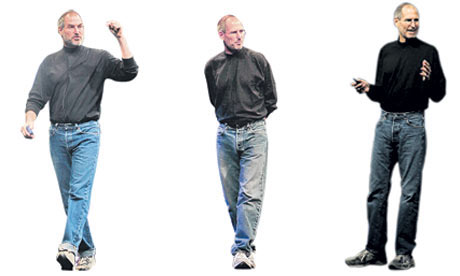
Certainly, whether he liked it or not, Jobs was a public figure, though he went to great lengths to maintain his privacy and shroud his personal life in secrecy. While his desire for privacy created an aura of mystery, it was his public appearances that gave birth to the Jobs legend. His keynote appearances (which became known as "Stevenotes") to introduce the company's newest offering became hotly anticipated events to the devoted Apple fanbase and, over time, a predictable pattern emerged. Jobs would appear last (always sporting the same signature look), hype Apple's product lines and sales figures, and then issue some general concluding remarks before feigning his stage exit, which he would always stop with the phrase, "But there's one more thing." And from there, Jobs would introduce the next piece of Apple magic that was both beautifully designed and simple to operate. It was also during these appearances where the toll of Jobs' cancer slowly showed its' effects.

While he was known as a hands-on executive who wanted his marketing to be every bit as well designed as his products, it was his role as the face of Apple that was Jobs' master stroke. To the devoted Apple user (and plenty of stockholders), Steve Jobs and Apple were one and the same and, as the "face" of the company, people grew to know him from his Stevenote appearances, or at least feel they knew him. Hence, Steve Jobs performed a virtually impossible marketing trick: he made a personal connection with his customers.

I've written about the importance of a personal connection before, but Jobs' role with Apple created the perfect combination of product and personality. The product part came from the loyal devotion of Apple users. Perhaps its the cool factor the design of Apple's products offer or the snob appeal that comes from owning a more expensive gadget that everybody wants. Or maybe it's their integration into several areas of a user's daily existence or simply their ease of use and ability to simplify one's life. Whatever the reason, Apple consumers seem to develop a stronger attachment to their Mac desktop or laptop computer, iPhones, iPods, and iPads.

As the face of Apple, Steve Jobs' became the person Apple customer connected with. Regardless of whether he came up with the idea for their desktops, laptops, iPods, iPads, iPhones, or the App store, or even had a hand in every level of their design and development, that he was the one who introduced them and showed off all their features with the same quirky routine helped customers make a personal connection to Steve Jobs and, by extension strengthened their bond to the Apple brand.

So why is that personal connection between brand and consumer important? Because, when your customers connect with you or your business on a personal level, they take ownership of what you sell and, by doing that, become ambassadors for you and your brand. They tell their friends where they got it, how it works, and how it's made their life better. They tweet about it on Twitter or mention it on Facebook if a friend or acquaintance asks for a recommendation. They post their positive experiences on user review sites on the web. In other words, when you make a personal connection, you build customer loyalty and empower an army of people marketing your goods and services for free!

So how does your marketing, advertising, or goods and services make a connection with your customer? It can be as easy remembering names on a micro level or actively engaging your customers on Facebook and Twitter on a larger scale, but the key is to find a way for your customers to take ownership of what you sell. You may never be as big as Apple but, if you can find a way to make a personal connection with your customers, you can take a big slice of your market's pie...

Wednesday, September 28, 2011

What The Godfather Can Teach You About Social Media


In the movie The Godfather, there's a scene where the Corleone family is arguing over how to best avenge the assassination attempt on their Father, Don Vito Corleone. The hotheaded Underboss of the family, Sonny, argues for violent, widespread retribution. His brother and Consigliere, Tom Hagen (Sonny found him on the street when they were kids, the family took him in, and he's been with them ever since. He's not Sicilian, but he's a good lawyer. He's not a wartime Consigliere, but...) urges a more peaceful approach, pointing out that "This is business, not personal!"

If you're blogging, and/or using Facebook and Twitter to promote your business, you should always remember those words, "This is business, not personal," before you post anything that reflects on you or company. Though blogging is an excellent way to increase visits to your website and to enhance interest in your business, and social media is a wonderful opportunity to engage customers, using business accounts to air your personal, political, or religious views, your dirty laundry, or even your rooting interest in a particular team, is a surefire way to poison your marketing efforts.

I've talked about creating your own bad PR previously, but was reminded of it again when I saw this Facebook update from the music hall owner I referenced in that post, who uses his Facebook account for both business and personal purposes:


Boom! Twenty words and one hotlink was all it took to alienate or tick off at least half his audience. (Also, I shouldn't have to say it, but it's probably not good form to tell your audience/customers to "shut up!") Given the current Red State/Blue State political climate in the US, it was no surprise that this reponse came quickly from a friend:


As so often happens, the political debate/argument raged in the comments section with typical "my side is right, your side is wrong" vitriol. Regardless of who's right or wrong, the person who made the comment above also made the most correct statement of all, at least as it applies to my point:


He's right and, as this example shows, it's just plain bad business to use your business forum, be it blog, Twitter, Facebook, or email newsletter to express your personal thoughts. Your views or beliefs as they apply to your business or industry are perfectly fine but, remember, your customers have their own thoughts and opinions and, in this day and age, they may differ widely from your own. Hence, it's a lot easier to tick someone off and, hence, lose customers.

Fortunately, if you are compelled to share your personal thoughts or dirty laundry on the web, there's an easy fix. Just set up a personal account in whatever medium you choose and air your thoughts, rants, grievances, bad experiences, and/or chili recipes there, with people who know and understand you. Then, keep your business thoughts in the business account where your customers and potential customers can grow to view you as a trusted, reliable information source. Save your personal views for your personal forum populated by friends and family.

Don Corleone said it best when he told Sonny, "Never tell anyone outside the Family what you're thinking." And if you want to keep your business from sleeping with the fishes, then keep your personal views to your family of friends and aquantainces and make sure any and every statement you make that reflects on your company is strictly business, not personal!

Wednesday, May 25, 2011

What The Royal Wedding Can Teach You About Your Marketing


Last month, 23 million Americans and perhaps billions more around the world tuned in to watch the wedding of Prince William and "commoner" Kate Middleton. If the population of the United KIngdom is around 62 million, how does one account for all the other millions of people who put their lives on hold to watch someone else's wedding on TV?

Certainly everyone had their reasons. Anglophiles were a big part of the audience, as were the fashionistas, who were dying to get an answer to the most insipid question of our time, "Who are you wearing?" I'm sure there were also the folks who just tuned in to see the hats, but most likely, the bulk of the audience was the people who just love weddings and this one, on the grand stage (in a special, commemorative issue of People sort of way), was the ultimate. These are the people who take joy in the romance of seeing love bloom as the handsome prince whisks the commoner away from her dreary existence via a horse drawn carriage to a storybook wedding. These are the people that watched the royal wedding to see the fairy tale happen in real time.

So how is any of this relevant to marketing and advertising? Simple: Every element of your marketing and advertising should be selling the fairy tale. You may be selling goods or services but, to market it properly, you have to overcome your customers objections and show them you offer the solution to their problem. Whether it's a new TV, carpet cleaning, or article of clothing, your marketing needs to connect with your customers so they'll be convinced that new TV will enhance their viewing experience like no other, their carpets will turn their home into a castle, and that new shirt will make them look just like Brad Pitt (or some other handsome prince).

For an example in its basest from, just look at anything that's been done to sell the Axe line of men's body sprays and grooming products. If you can't stand to watch it, the gist of the campaign directed toward young males is that, if you use this crap, you'll be irresistible to women. The takeaway is simple I know, but it certainly appeals to the post-pubescent male.

So how can you do it? Easy! While you should sell the benefits and USP (universal selling point) of your goods or services, you should also make sure your marketing and advertising shows how you provide the solution your target audience is searching for. Yes, "breathable, 100% cotton" will help sell a shirt but, if the shirt isn't going to enhance the wearer's appearance (that subliminal, "make me look like Brad Pitt" thing), then you're wasting your time and money talking about its' composition. Ultimately, your goal should be to establish your brand such that your consumers will buy your product based on reputation alone (i.e. "Brad Pitt wears that brand of clothing so, if I buy it, I'll look like he does by association.").

In the end, it comes down to this: Don't just sell your product. Instead show how your product or service will change, improve, or complete your customers' lives. Whether its cat food or carpet cleaner, there's a fairy tale to be told. And if you're having trouble finding the storybook ending in your marketing and advertising, maybe you need a new story teller...

Friday, June 25, 2010

Is Your Marketing And Advertising An Expense Or An Investment?

Recently I was comparing two clients. Both are multiple outlet retailers, both are in similar markets, and both had initially pursued comparable marketing plans. The difference was, one (we'll call Company A) was thriving and one (Company B) was struggling and will likely have to make drastic changes, like closing stores, cutting personnel and even bankruptcy, in the near future.

As I considered their situations and wondered what might have been done differently, I realized the most significant difference was their outlooks. Company A approached advertising as an investment in their company, knowing that it can ultimately provide a return. Company B, however, always looked at advertising and marketing as an expense, or a necessary evil.

While they both started out in similar fashion, Company A set up a solid marketing plan and stuck to it in good times and bad, knowing the money they spent each month would likely be recouped through increased sales and visibility. Company B also set up a marketing plan and stuck to it…for awhile. However, when slower times came along, Company B started cutting expenses and their advertising budget was the first to go under the knife. The problem is, now that their business is struggling even further, Company B doesn't have the money to put towards the "expense" of advertising, and they'll likely be unable to generate new business to increase their sales.

Now, consider your advertising and marketing outlook. Is your advertising budget money you're putting back into your business to help it grow even more? Or, do you see your advertising as a cost of doing business that could be better spent elsewhere? While there's no set formula for how one feels about advertising, if you want to change your business fortunes, you might have to change your outlook.